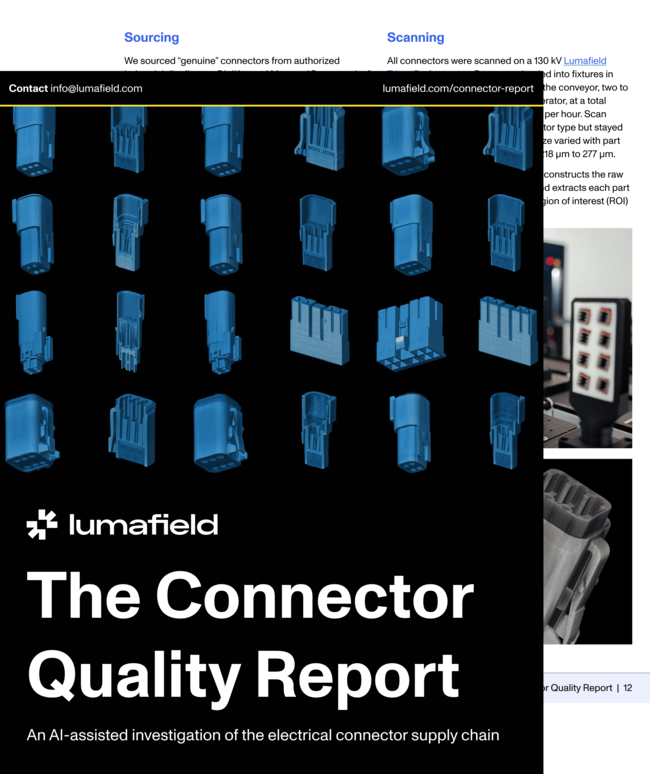
The Connector Quality Report
An AI-assisted investigation of the electrical connector supply chain
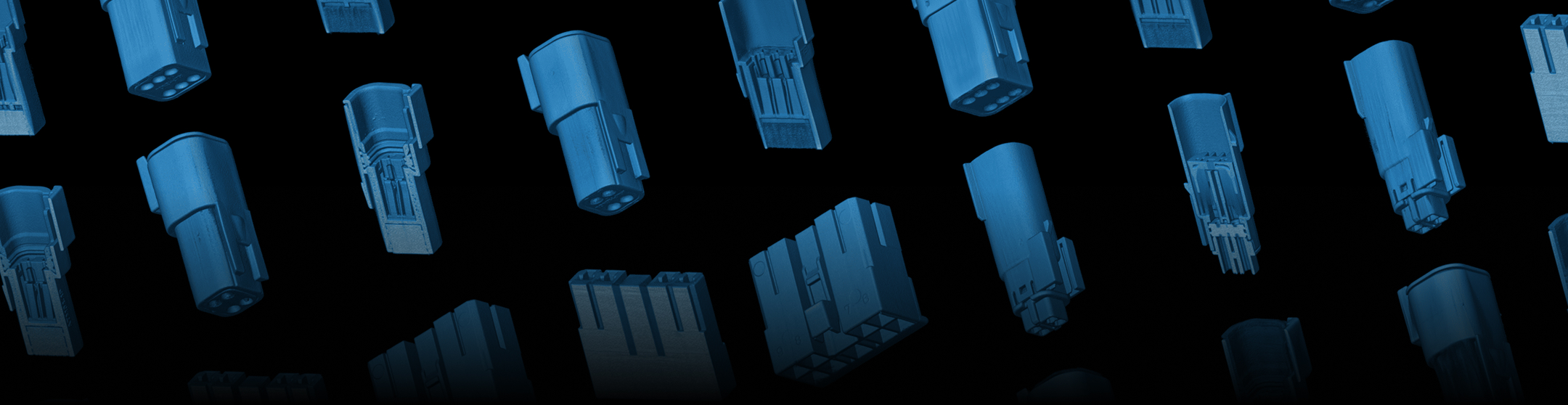
Every measurement came from Lumafield’s Quality Agent. For each of eight connector part numbers, it built an analysis, tested it on a few units, and then ran it on every housing, 1,451 in all. It measured material attenuation, porosity, wall thickness, and shape against a known-good reference. We bought the parts from authorized distributors and AliExpress and scanned them on a Lumafield Triton.
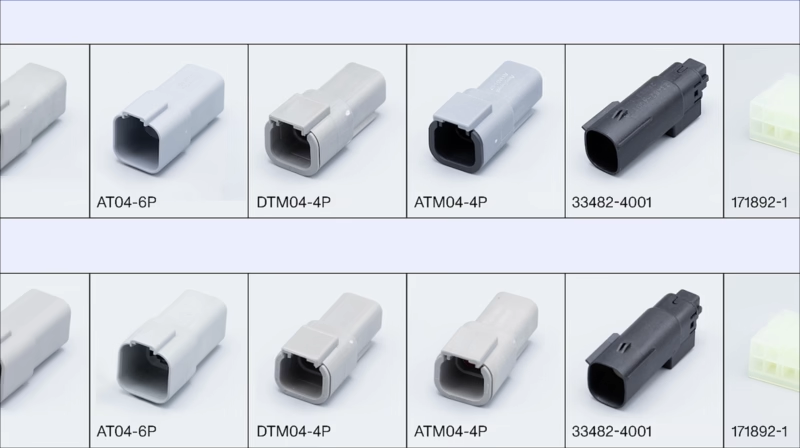
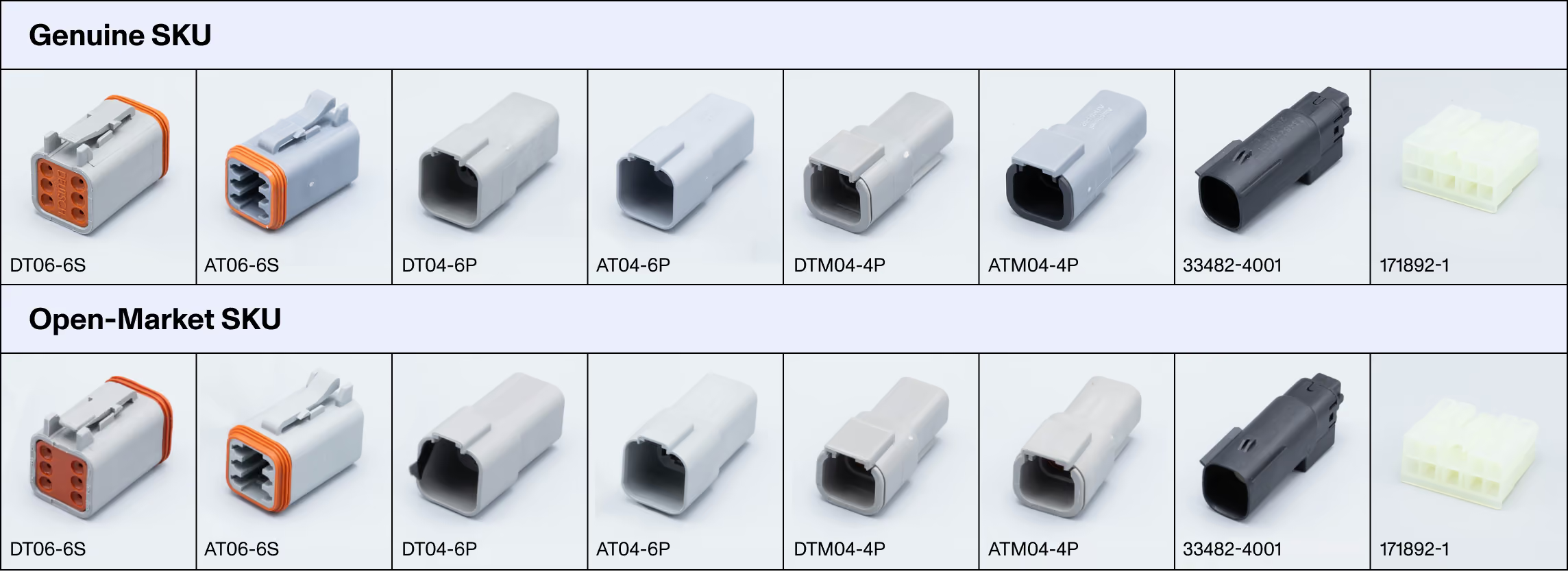
From outside, the open-market housings passed for genuine. Inside, they strayed further from the reference shape on seven of eight part numbers and had thinner walls on four. Even genuine parts from two manufacturers, sold as drop-in replacements for each other, differed in composition and clip design. A continuity test or visual check isn’t built to catch any of this. The report shows where these differences sit and how much can vary under one part number.

17.6 million+
vehicles covered by U.S. recalls naming a connector since 2010
1,451 connectors
scanned and analyzed
805,557 CT slice images
analyzed by Quality Agent
100% accuracy
sorting genuine from open-market units on five part numbers
Every measurement came from Lumafield’s Quality Agent, which built an analysis for each part number, tested it on a few units, and ran it on all 1,451 housings. It measured material attenuation, porosity, wall thickness, and shape against a known-good reference. The study covered eight connector part numbers from authorized distributors and AliExpress, scanned on a Lumafield Triton. Six belong to the DT family and a second manufacturer’s drop-in equivalents, so we could compare one form factor across channels and brands.
From outside, open-market housings looked genuine. Inside, they strayed further from the reference shape on seven of eight part numbers and had thinner walls on four. Even two authorized makers of a drop-in pair differed in composition and clip design. A continuity test or visual check isn’t built to catch these. The report shows how much can vary under one part number.
What the scans showed

Same part number, different material
Open-market housings absorbed X-rays differently from genuine ones under the same part number. On one sealed connector, the difference is consistent with less glass fill than the drawing specifies. That signal alone sorted nearly every unit to its source.

Fewer voids, but bigger ones
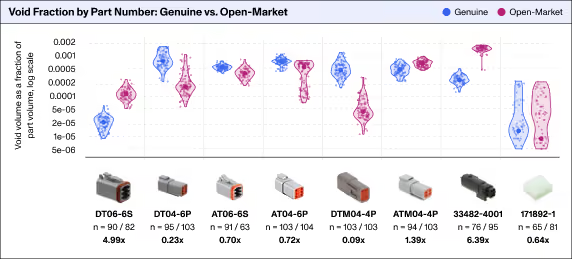
On one sealed connector, genuine housings held more voids, but the open-market housings held far larger ones. Which source carried more void volume flipped from one part number to the next, so a single porosity limit would miss some of these patterns.

Locks that were already engaged
Quality Agent flagged open-market housings whose lock reinforcement was already in its final position, which no genuine unit did. On an assembly line, a housing in that state can’t take its terminals without a reset and usually goes to scrap.
Download the Connector Quality Report to discover:
- How genuine and open-market housings compare across eight connector part numbers on material attenuation, porosity, wall thickness, and deviation from a golden reference.
- What CT shows about a drop-in pair from two authorized manufacturers, and about mated connectors with their seals in working position.
- How Quality Agent built and ran an analysis for each part number across 1,451 housings, and where CT fits alongside continuity testing, AOI, CMM, and cross-sectioning.
- Part-number datasheets with annotated scans and key measurements.
See what automated CT analysis finds inside connectors sold under the same part number.